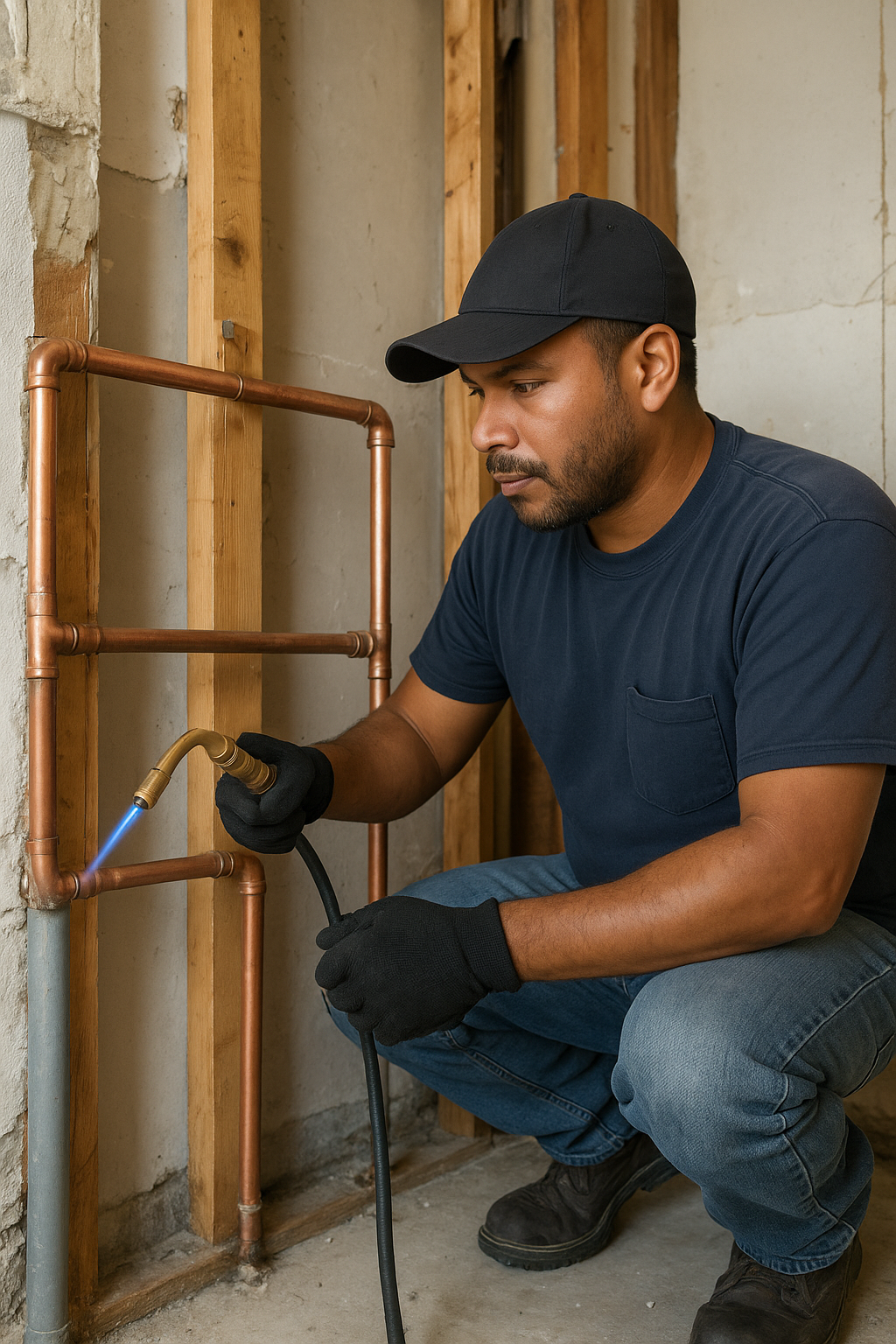
Houston's older homes in the Heights and Montrose often still rely on galvanized steel lines installed decades ago. These pipes corrode faster under the area's subtropical humidity and occasional hard water from municipal supplies, leading to pinhole leaks and reduced flow. Copper repipe replaces the entire system with type L or M copper that resists corrosion better in this environment while meeting Harris County plumbing codes for residential work.
Access challenges vary sharply by neighborhood. River Oaks and Midtown properties frequently have slab foundations or limited crawl spaces that require careful trenchless techniques or selective wall opening to minimize disruption. Downtown and nearby high-density homes add the complication of shared walls and tighter utility easements, so planning must account for coordination with city permits and neighboring properties.
Seasonal timing matters. Mild winters allow year-round work, but the intense summer heat and humidity increase condensation inside walls during installation, requiring extra drying time before drywall repair. Repiping in Katy, Sugar Land, or Pearland homes often involves longer supply lines from the street main, raising material needs and affecting overall project sequencing.
Copper offers excellent longevity in Houston soil conditions when properly sleeved and grounded, yet installers must watch for stray electrical currents common near older downtown infrastructure. Proper dielectric unions and correct soldering technique prevent future pinholes at joints, a detail that separates lasting repipes from those that fail within a few humid summers.
Technician insight
In Houston the thing that catches most people out with Copper Repipe is how quickly humidity drives pinhole leaks in galvanized lines once the protective zinc layer fails, especially in 1950s–1970s Heights and Montrose homes where slab access is limited and attic routing becomes the practical path.
Montrose Bungalow Repipe
Galvanized lines in a 1960s Montrose bungalow had developed multiple pinhole leaks under the slab. We mapped an attic route that avoided major demolition, installed new copper mains and branches, and tied in dielectric unions at every transition. The system now delivers steady pressure with no active leaks.
Copper Repipe Services We Offer
✓Whole House Copper Repipe
Complete replacement of galvanized or polybutylene lines with copper throughout the home, restoring pressure and eliminating leak risks in Heights and Montrose properties.
✓Kitchen Copper Repipe
Targeted copper line replacement for kitchen sinks, dishwashers and ice makers, addressing corrosion common in older River Oaks homes.
✓Bathroom Copper Repipe
Full copper upgrade for showers, tubs and vanities to stop pinhole leaks caused by Houston's humid conditions and aging supply lines.
✓Slab Leak Copper Repipe
Rerouting copper lines above slab or through walls when underground leaks are found in Midtown and Downtown foundations.
✓Attic Copper Piping Installation
Running new copper mains and branches through attics to avoid slab work, suitable for many single-story homes in Pearland and Sugar Land.
✓Exterior Hose Bibb Copper Upgrade
Replacing exterior spigots and supply lines with copper to prevent freeze and corrosion issues during mild but wet Houston winters.
Copper Repipe Cost in Houston, TX
| Service | Typical Range | What Affects It |
|---|---|---|
| Whole-house copper repipe | $7,500–$14,000 | Varies with square footage and whether attic routing is feasible in Heights or Montrose homes. |
| Kitchen and bath copper upgrade | $3,200–$6,500 | Depends on number of fixtures and wall access in older River Oaks properties. |
| Slab leak copper reroute | $4,800–$9,200 | Higher when multiple trenches or wall openings are needed in Midtown slabs. |
| Attic main line copper | $2,900–$5,400 | Lower cost option when attic access exists in single-story homes near Katy or Sugar Land. |
Ranges are typical for Houston, TX and confirmed with an exact written quote before any work starts.
How it works
- 1
On-Site Assessment
Inspect existing piping, note access points, and map routes through walls or attic spaces in the specific Houston neighborhood.
- 2
Material Planning
Select copper type and fittings sized for the home's demand while accounting for local water pressure variations.
- 3
Old Line Removal
Cap and abandon galvanized lines where possible, then create clean pathways for new copper without unnecessary demolition.
- 4
Copper Installation
Solder or press-fit new lines, install shutoffs, and ensure proper grounding and dielectric protection.
- 5
Pressure Testing
Pressurize the system, check every joint, and restore water service with final walkthrough.
Pricing
Upfront quotes after inspection; cost driven by home size, access difficulty, and whether attic or slab routing is required.